On this page
What can the evidence tell you about BPC-157 safety?
Short-term tolerance has been observed in a small human study, but a dependable side-effect rate has not been established. Published testing and reports of unwanted reactions both need to be considered. Neither a few uneventful exposures nor an isolated adverse event tells us how most people will respond.12
When comparing a vial, pen, capsule or spray, separate three questions: what is known about the peptide, what was tested in that finished product, and what happened with the particular route. A safety observation about one preparation does not answer all three.
Which BPC-157 format are you researching?
Preparation and product-documentation questions differ by format. Start with the actual contents and the report for that product.
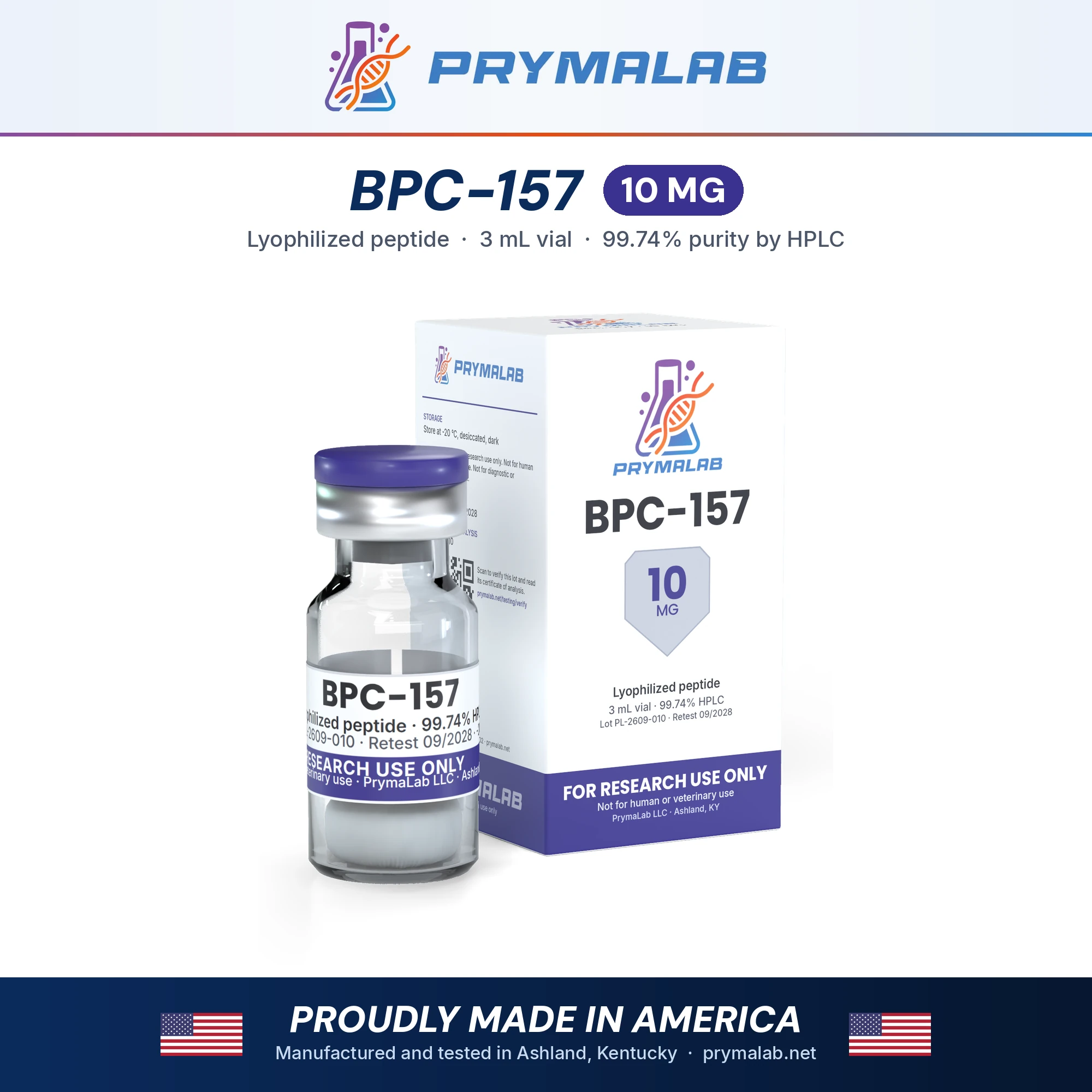
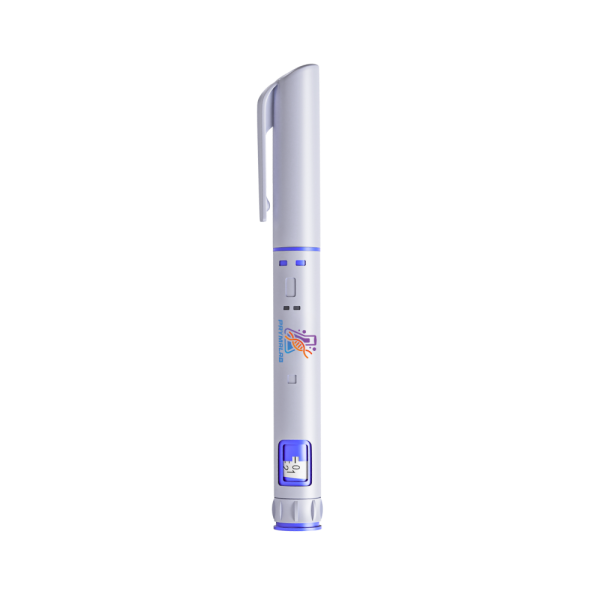
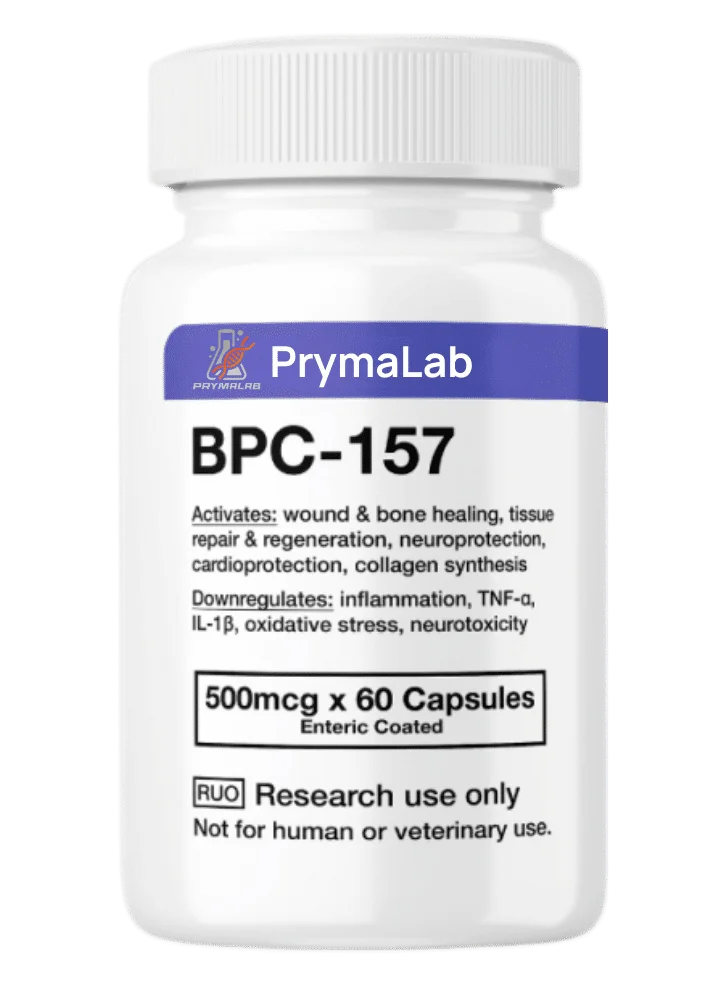
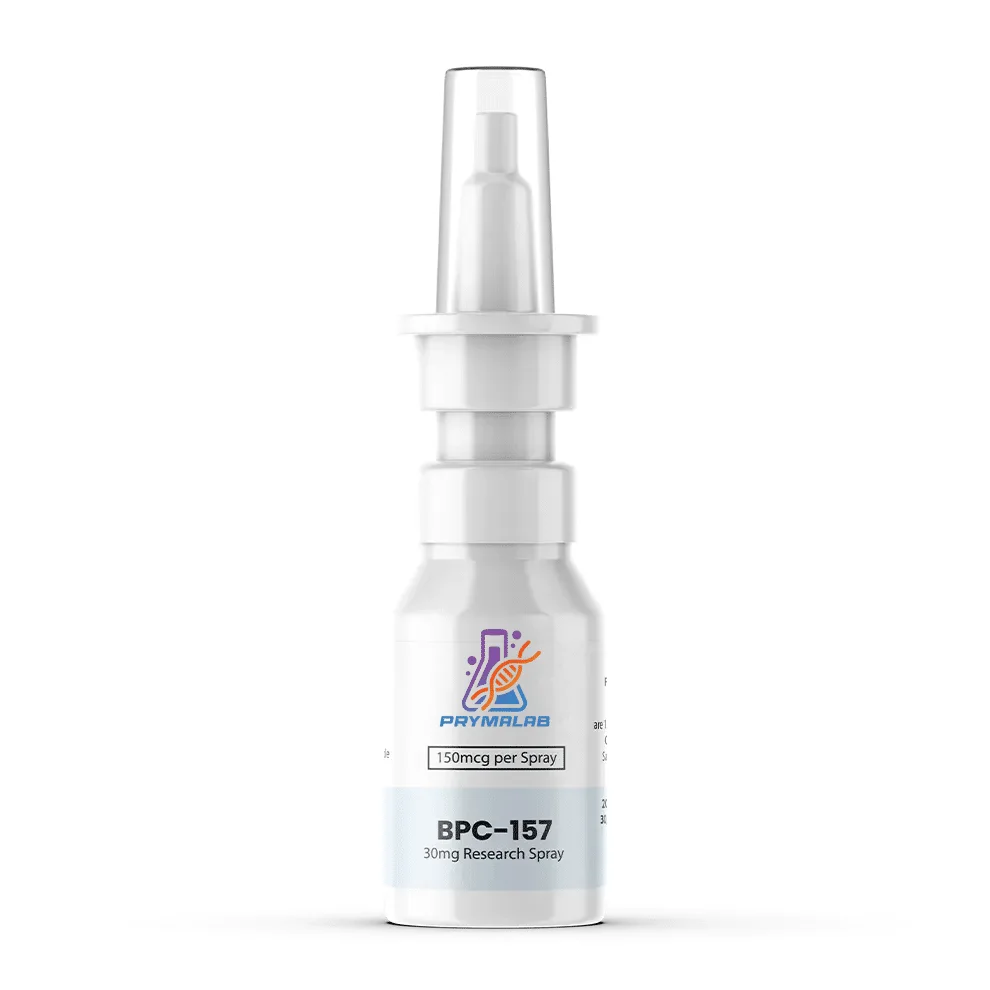
The vial and capsule have separate in-house batch reports. Those documents do not certify the finished pen or spray.
Which BPC-157 side effects have actually been reported?
FDA's 2026 assessment describes three reports involving injectable products in a database search ending December 4, 2025. An older enema study adds a different kind of evidence.1
| What happened? | Which exposure? | Important detail |
|---|---|---|
| Redness and swelling at an injection site | Injectable BPC-157 with concurrent thymosin use | More than one product could have contributed. |
| Shortness of breath followed by an emergency visit | Subcutaneous BPC-157 acetate | The report lacked complete timing and medication information. |
| Darkening of skin and gums | A BPC-157/TB-500 blend | The reaction returned after restarting; the responsible ingredient was unclear. |
| Headache and flatulence | An exploratory enema trial | There was no obvious difference in frequency or severity from placebo. |
A separate two-month oral-use account mentions fatigue early on and muscle soreness, as well as better digestion. The writer could not tell whether BPC-157 caused the soreness. Its formulation was unspecified; see the oral and capsule discussion for the full context.19
“Reported” does not mean “common” or “confirmed.” Spontaneous reporting does not count every exposure, and a report may be incomplete or affected by other illnesses and medicines. FDA says these data cannot establish causation or incidence.3
What happened in the published IV safety study?
The 2025 pilot involved two adults, ages 58 and 68, who had previously received IV BPC-157. They underwent two infusions with assessments extending through day three. Neither reported a side effect, and the laboratory markers and vital signs measured did not show adverse changes.2
That is reassuring for those particular observations. Two people over three days cannot reveal an uncommon reaction, the effects of repeated courses, or the safety of a capsule or nasal formulation. The study also did not test people encountering IV BPC-157 for the first time.
When should a reaction be treated as urgent?
Trouble breathing, tongue or throat swelling, fainting or collapse after an exposure need emergency care. Call 911 in the United States or the local emergency number. These can be signs of anaphylaxis.4
An injection area that grows redder, hotter, more swollen or more painful needs prompt medical assessment, especially if fever or chills develop. Spreading skin inflammation can indicate infection. A worsening site reaction is not evidence that a peptide is “working.”5
Are capsules or nasal sprays safer than a vial or pen?
They avoid using a needle, but comparative human safety has not been established. Format changes the handling requirements and exposure. It does not give a reliable ranking from safest to least safe.
| Format | What deserves attention? | What does the format not establish? |
|---|---|---|
| Powder vial | Identity, sterility, actual concentration, preparation and storage | A correct dilution calculation does not demonstrate injection suitability. |
| Prefilled pen | Finished-product testing and the device's delivered volume | Prefilling does not eliminate injection or contamination risks. |
| Capsules | Amount per capsule, ingredients and batch identity | A needle-free route does not rule out systemic reactions. |
| Nasal spray | Amount per spray, formulation and contamination controls | Absence of mixing does not establish long-term tolerance. |
FDA's review includes immune-response concerns for nasal delivery.1 For injections, CDC calls for new sterile needles and syringes, aseptic preparation and disposal when sterility is in doubt. The measurement and reconstitution guide explains the calculations separately from these product-quality requirements.6
Can a high-purity batch still leave safety questions?
Yes. Purity is one measurement, not a complete product assessment. FDA flags possible immunogenicity, meaning unwanted immune responses, and challenges with peptide impurities and characterization of the active ingredient in BPC-157 preparations.7
A label saying “99% pure” does not itself establish the amount in the container, sterility or endotoxin results. These require distinct tests; FDA's quality guidance treats sterility and bacterial endotoxins separately.9
Read the batch number, sample description, test method and result together. A report for a powder lot does not automatically cover the liquid pen made later. FDA also identifies contamination and incorrect strength as risks of poor compounding.8
Is the concern about BPC-157 and cancer proven?
No proven human cancer risk has been established, but long-term reassurance is missing too. FDA's evaluation found no carcinogenicity studies for the free-base or acetate forms.1
The biological question comes partly from angiogenesis: forming blood vessels. BPC-157 increased vessel-related responses in experimental wound repair and cultured endothelial cells.10 Tumors can also depend on a blood supply for nutrients and oxygen.11
Connecting those observations does not demonstrate that BPC-157 causes cancer or accelerates a person's tumor. It does explain why wound-healing findings are insufficient reassurance for someone with cancer. Discuss active cancer, a cancer history or an unexplained lump with the treating clinician before considering exposure.
What is known about women, pregnancy and breastfeeding?
There is no established female-specific risk estimate or pregnancy-safe amount. The IV pilot's only female participant was 68 years old; it cannot answer questions about periods, fertility or pregnancy.2
A preclinical toxicology paper found no embryo-fetal toxicity in its animal tests. That observation cannot establish human pregnancy or breastfeeding safety.12 If pregnant, trying to conceive or breastfeeding, bring the exact proposed product to your clinician for discussion. FDA advises reviewing medicines with a healthcare professional during pregnancy and breastfeeding.13
What should you check before combining BPC-157 with anything else?
A blank interaction-checker result is not proof that a combination has been studied. The available clinical evidence does not supply a validated BPC-157 interaction chart.
Give a pharmacist or clinician the full list of prescriptions, over-the-counter pain medicines, supplements and other peptides. Include the intended product, route, amount and timing. Reviewing everything together is more useful than asking about “peptides” as a group; FDA recommends considering all medicines and supplements when checking interactions.13
The BPC-157 and TB-500 stack introduces a second ingredient. If a reaction follows, identifying its cause becomes harder. Adding TB-500 is not an established strategy for preventing adverse effects, and a prescribed medicine should not be stopped to accommodate an experimental combination.
What does FDA approval status mean for BPC-157 in 2026?
BPC-157 is not an ingredient in an FDA-approved drug. The official status sources linked here were rechecked on November 3, 2026.14
| Document or process | What it says |
|---|---|
| July 2026 compounding committee agenda | BPC-157 free base and acetate were scheduled for consideration for the 503A Bulks List, with ulcerative colitis as the evaluated use. Advisory recommendations are nonbinding.15 |
| Current FDA safety-risk page | BPC-157 appears under substances nominated but withdrawn. The entry retains concerns about immune responses, impurities and limited safety information.7 |
| A compounded preparation | Compounded medicines do not undergo FDA approval as finished drugs. The involvement of a pharmacy does not change that distinction.8 |
A committee discussion, withdrawn nomination and drug approval are separate events. For a particular prescription, ask the dispensing pharmacy which current requirements apply to that substance and formulation.
What details help a clinician assess a suspected reaction?
Seek care for new or worsening symptoms and keep the container and packaging. Record the ingredient list, lot number, concentration, amount, route, exposure dates and symptom onset, along with other medicines and any treatment received. These are among the details FDA requests in an adverse-event report.16
Do not restart a suspected product simply to see whether the reaction returns. Consumers can submit suspected reactions and quality problems through FDA MedWatch; a clinician can help add medical findings. Reporting a concern does not require you to prove the cause first.17
Can a dose, ingredient number or blood test settle the safety question?
Is a low dose or short cycle proven safe?
There is no validated general human regimen in these sources. The dosage guide distinguishes amounts people reported from concentration calculations. Describing a four- or six-week course does not establish its safety.
Does an FDA UNII number mean approval?
No. The substance record states that a UNII identifier does not imply regulatory review or approval. It helps identify the ingredient; it does not approve a finished product.18
Do normal blood tests make repeated courses safe?
No. Normal results answer questions about the markers measured at that time. The two-person IV pilot cannot establish long-term safety or exclude effects it did not measure.2
Sources for this safety guide
- FDA — BPC-157 compounding review and adverse-event assessment. 2026 briefing.
- Lee & Burgess — Intravenous BPC-157 safety pilot. Alternative Therapies in Health and Medicine, 2025.
- FDA — Adverse-event dashboard limitations.
- MedlinePlus — Anaphylaxis symptoms and emergency care.
- MedlinePlus — Cellulitis.
- CDC — Preventing unsafe injection practices.
- FDA — Bulk substances that may present significant safety risks. Current BPC-157 entry.
- FDA — Compounding questions and answers.
- FDA — Q6A specifications, including sterility and endotoxin tests.
- Huang et al. — Wound healing and endothelial-cell experiments. Drug Design, Development and Therapy, 2015.
- National Cancer Institute — Angiogenesis and cancer.
- Xu et al. — Preclinical safety evaluation of BPC-157. Regulatory Toxicology and Pharmacology, 2020.
- FDA — Drug interactions and medication review.
- FDA — BPC-157 advisory-committee presentation. July 23, 2026.
- FDA — July 2026 committee agenda and advisory role.
- FDA — Information to include in a MedWatch report.
- FDA — Reporting serious problems.
- FDA — BPC-157 substance identifier and approval disclaimer.
- Two-month oral account: digestive comfort, fatigue and soreness. Reddit; personal report.